
Does Every Clothing Order Need an Inner Bag?
No. Choose the layer because it serves a defined packing task. An inner bag can keep a folded item together, separate pieces in a set or provide a place for an agreed SKU label. If your suitable soft-goods order needs none of those functions, compare an outer mailer without the extra layer. Confirm the complete packing method with the people who will use it.
Welltroy’s Zipper Bags are presented as inner packaging for clothing, accessories and sets. Compare them with Poly Mailers for the outer shipping layer. A zipper inner bag is not a substitute for a confirmed shipping construction.
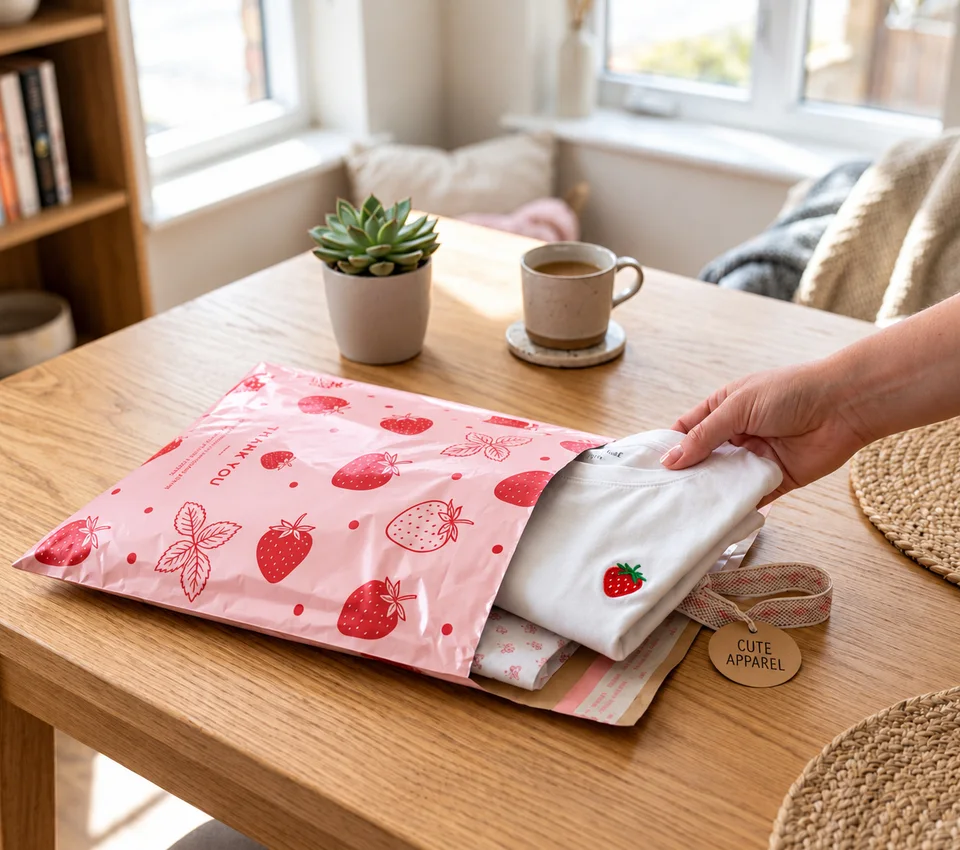
How Do I Measure a Garment for a Zipper Inner Bag?
Measure the widest width, longest length and greatest thickness of the folded item with its inserts. Ask for usable space below the zipper and between the seams, rather than relying only on the listed outside dimensions. The closure and the bag’s construction consume space. Test insertion, removal and full reclosure with a physical sample before approving the size.
- Fold the garment as the packing team will fold it; include hang tags, cards or tissue that stay inside.
- Record width × length × thickness and the direction used to insert the garment.
- Request the offered bag’s usable dimensions, measurement convention and tolerance.
- Close the zipper with the garment inside and check whether it presses against the closure or seams.
- Measure that finished inner pack again before selecting an outer mailer.
Use the clothing mailer measurement guide to assess the outer layer. Neither the garment’s retail size nor a flat bag dimension establishes a complete fit.
Can One Bag Size Cover Several Clothing SKUs?
Sometimes, after comparing the actual folded packs. A garment SKU is not necessarily a separate packaging version. Group items by measured packing needs, then check the largest, thickest and smallest examples within each group. Keep a written mapping so the team knows which approved inner and outer bags to use.
Swipe the table to compare clothing order combinations.
| Order | Layer decision | Fit check |
|---|---|---|
| One folded T-shirt | Compare a suitable shipping mailer alone with an inner bag plus outer mailer. Use the extra layer when your presentation, storage or packing routine needs it. | Check the folded garment first, then remeasure with the chosen inner bag and inserts. |
| A hoodie or sweatshirt | Choose the inner bag around the relaxed folded thickness, then check the finished pack in the outer mailer. | Test loading and zipper reclosure without forcing the fold; check the outer flap and seams. |
| Several garment sizes | Compare actual folded examples before assigning one or several inner bags. Garment size labels do not determine bag size. | Record which garment SKUs fit each approved bag; check the largest and thickest examples. |
| A two-piece set or mixed order | Decide whether items share one inner bag or need individual identification, then test the complete shipping combination. | Check combined thickness, label visibility and the packing sequence. |
How Should I Choose Clear or Frosted Bags and Label Positions?
Decide what must be seen through the bag and where identification must remain readable. Confirm the offered finish, material, thickness and zipper construction for your specification; do not assume every appearance uses the same construction. Put the actual folded garment and label in the sample to check visibility, artwork and interference with the opening.
List requested hole positions or warning text explicitly when relevant. Their availability and the final destination-specific requirements need confirmation; this guide does not establish that every option is offered or suitable for every market.
What Should a Clothing Zipper Bag Size Record Include?
Record the garment group, its measured fold, the proposed bag version and the sample check. Keep garment SKUs separate from packaging versions: several garments may share an approved bag, while a change in size, finish or artwork may require a different quoted configuration. Confirm the minimum and quantity for each configuration with the supplier.
| Record field | What your packing team should supply |
|---|---|
| Garment group and fold | Styles or SKUs assigned to this pack; folded width × length × greatest thickness, with units and inserts included. |
| Inner bag version | Catalogue reference if known; requested usable space below the zipper, material, finish, closure and artwork version. |
| Label and quantity | Label position and visibility with the garment inside; quantity for this size, color and artwork version. |
| Outer-pack mapping | Measure the closed inner pack again; record the outer mailer reference and the customer-order combinations checked. |
| Sample approval | Retained sample reference, loading and full reclosure observations, unresolved changes and approval owner. |
For one proposed bag shared by several garments, check the smallest as well as the largest or thickest packed examples. Avoid excess movement as well as seam or zipper strain. Recheck the affected combinations when folds, inserts or bag specifications change.
What Should a Brand Give Its Factory or 3PL?
Provide a packing rule, not just a bag name. State the garment or set, inner bag reference, label location, inserts, outer mailer reference and sample version. Agree who supplies the packaging and who approves changes. A warehouse may operate the packing process while the brand remains the buyer of the custom bags.
- Brand / procurement: quantities per bag version, artwork, reorder reference and destination brief.
- Garment factory / packer: fold, loading direction, zipper closure, label position and item-to-bag mapping.
- Warehouse / 3PL: complete order combinations, outer mailer choice, courier-label area and exception handling.
What Should I Approve Before Reordering?
- Identify the inner and outer products separately, including size convention, usable space, material, thickness and closure.
- Keep each approved artwork, label position and finish reference with the corresponding bag version.
- Pack the actual garment combinations; check loading, reclosure, outer sealing and intended handling.
- Record the quantity for each product, size, color and design, plus the retained sample reference.
- Recheck affected samples if the garment fold, material, zipper, artwork or order combination changes.
Follow the sample approval checklist and confirm the offered specification in writing. Material, disposal or specialist-use claims require evidence for the exact product.
Can I Request Inner Bags and Outer Mailers Together?
Yes. Choose “Multiple products” in the enquiry and list each bag separately. Ask for the minimum quantity per confirmed specification; a combined total across inner bags, outer bags or artwork versions does not automatically meet each minimum. Confirm sample type, courier charges and the destination-specific delivery scope.
Brand / project:
Garment types, folded dimensions and inserts:
Items per customer order:
Inner zipper bag: usable size / finish / closure / artwork:
Outer mailer: usable size / material / closure / artwork:
Quantity per product, size, color and design:
Label location and packing-rule reference:
Sample type, fit checks and approval owner:
Destination country and postal code:
Required arrival date:
Samples are free. Preparation can take as little as 3 days after specifications and artwork are confirmed. The delivery target is within 7 days of confirmation, depending on destination. Confirm the sample type and shipping arrangements, including any delivery charges, before dispatch.
Current sample, design and production terms →
Packing References and Scope
These references support the general packing workflow. Welltroy product availability and order terms come from the linked product pages and your quotation.
- Shopify: shipping clothing — consider the actual garments, packaging and complete parcel when choosing a pack.
- ShipBob: apparel fulfilment — brands can supply their own branded packaging to a fulfilment operator; buyer and packing operator can be different parties.