Brand and product owner
Define the contents, customer opening experience, target fill and shelf presentation. Assign each product or flavor its own artwork and quantity.

Retail product and filling projects
For craft and accessory brands, specialty snack teams and the people who fill their products: define what goes into each pouch and who approves the filled pack. Begin with the contents and sales format, then confirm usable capacity, material, closure, artwork and documents for the selected application.
By Welltroy · Updated
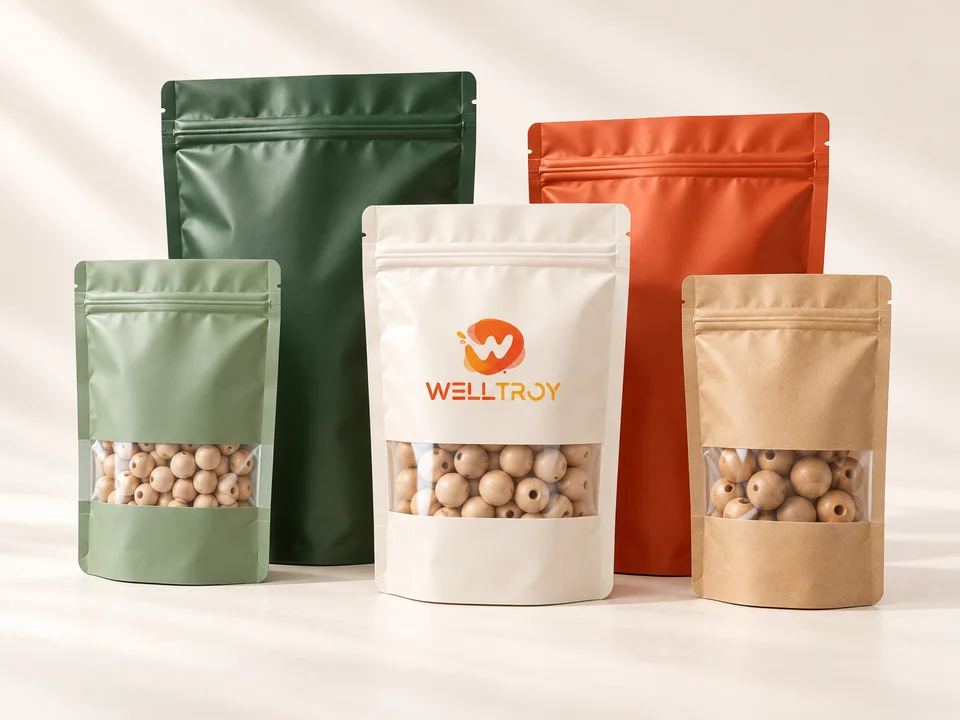
Provide the contents, target fill amount, storage conditions, filling and sealing process, artwork versions and destination market. Confirm size with the real product in a sample, then agree the material structure and required evidence. A flat size, zipper or pouch photo does not establish capacity, shelf life or suitability for food.
The brand can buy the pouches while a separate workshop or contract packer fills them. Confirm the approval and supply responsibilities before ordering.
Define the contents, customer opening experience, target fill and shelf presentation. Assign each product or flavor its own artwork and quantity.
Confirm the usable opening, filling equipment, seal area and process. Trial the actual product in the sample and record contamination or handling problems around the seal.
Agree the exact quoted structure, sample version, required documentation and destination. Record who validates storage and shelf-life targets before the artwork makes a claim.
Match the complete order
These are planning routes to review with your actual contents, rather than guaranteed protection or fit recommendations.
Swipe the table to compare the packing routes and checks.
| Product project | What to brief | What the sample or evidence must establish |
|---|---|---|
| Craft parts, beads or accessory kits | Item count, packed volume, sharp edges, component separation and whether contents need to be visible. | Opening, puncture concerns, zipper operation, stable filled base and readable labels. This is a candidate application to assess. |
| Dry snacks or nuts | Exact food, fill amount, storage, intended shelf life and moisture, oxygen or light sensitivities. | Selected structure and applicable food-contact documents; filled and sealed trials. No food suitability follows from the generic pouch name. |
| Several retail SKUs or flavors | Product differences, fill for each SKU, front/back artwork and quantity per version. | Test each fill rather than assuming one pouch holds every product; keep label and artwork versions identifiable. |
| Liquids, heated filling or demanding refill products | Contents, chemical compatibility where relevant, filling conditions and leak or special-process requirements. | A separate construction assessment and validation are needed; the catalogue zipper pouch is not confirmed for these uses. |
Resolve the product fit before final artwork. A visually approved pouch can still be unsuitable for the filling or storage process.
Specify width, total height and bottom gusset on a confirmed dieline. Check opening, headspace, top seal clearance and shelf stance with the real contents.
Request the layer sequence, thickness, closure and relevant test documents. Any barrier target needs its units and test conditions; a target shelf life needs validation for the filled product.
List quantities by size, structure and artwork. Catalogue and made-to-order printing routes can have different minimums and setup; confirm the offered route in writing.
A brand wants one visual design family for two products with the same target weight. First fill each real product into candidate samples: different density or shape can require different usable space. After confirming size and sealing for both, request quantities and artwork versions separately. This is an example of the decision process, not a capacity recommendation or a completed customer project.
Ready for a comparable quotation
Copy these fields into your enquiry. Leave a specification open when you need help choosing it, and state the destination and arrival deadline.
Brand / product project:
Contents and sharp, oily, powder or liquid characteristics:
Fill weight / volume / item count for each SKU:
Storage conditions and target shelf life:
Candidate width × height × bottom gusset convention:
Filling equipment / temperature / sealing process:
Material, barrier and destination-document requirements:
Zipper, notch, window or other requested features:
Artwork and quantity per SKU / size / structure:
Filled-sample approval and quality owner:
Destination country, postal code and required arrival date:
Mondi: dried-food packaging and barrier applications — Application context for matching barrier needs to contents. Mondi specifications and certifications do not apply to Welltroy pouches.
No. The same weight can occupy different volumes depending on density and shape. Check each real fill, headspace, zipper and top seal before choosing the pouch size.
A zipper supports reclosing but does not by itself establish the initial seal, leakage resistance or tamper evidence. Agree the initial sealing method and test it with the actual filling process.
Possibly, after checking the fill and material needs of every product. List the artwork and quantity for each version and confirm separate setup and minimum requirements.
No. Confirm the exact selected structure, intended contents and destination-market documents. A product photo or general supplier statement does not approve every pouch for food.
Allow Google Analytics cookies to improve this site? You can enquire either way. Details